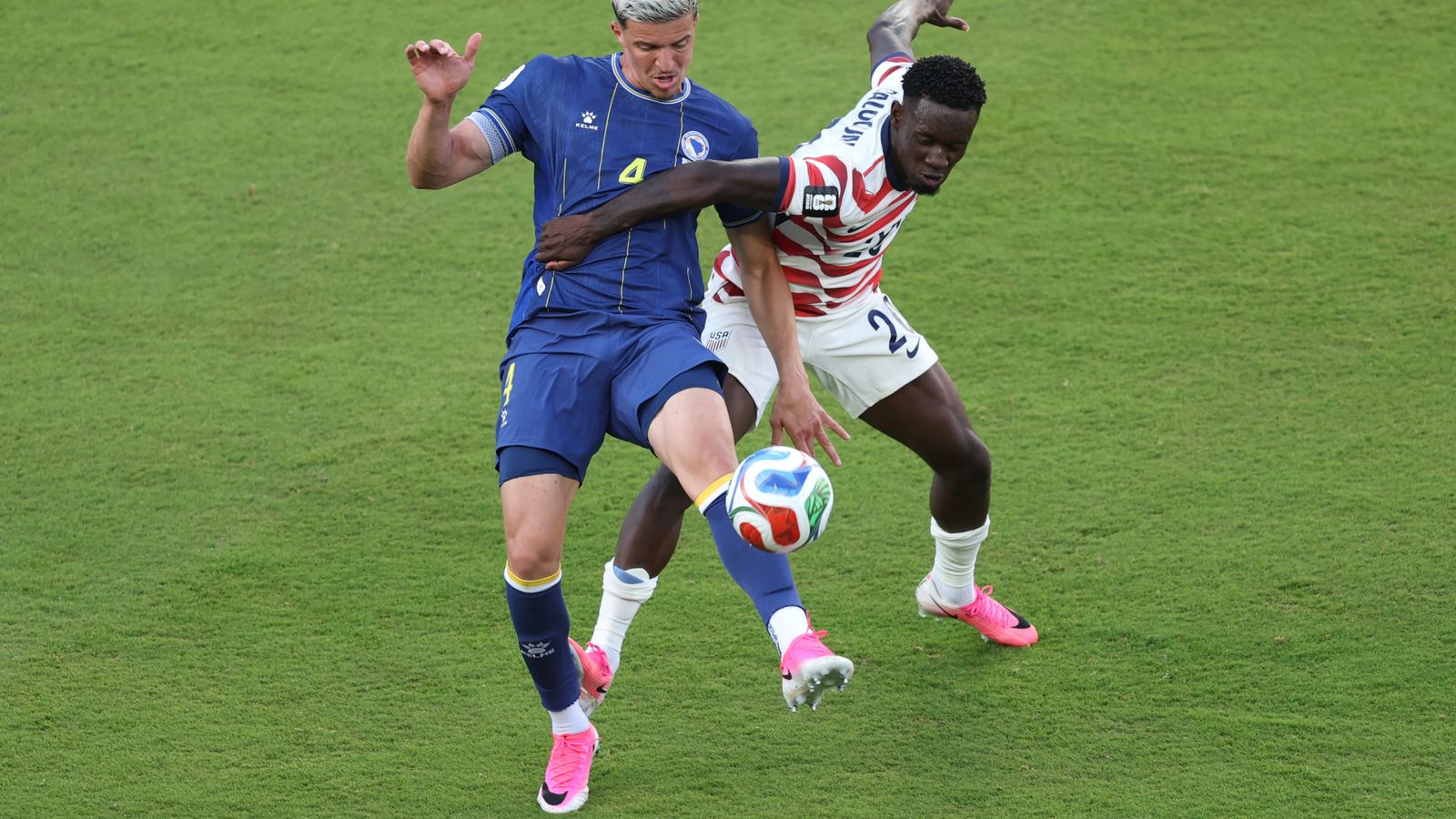
In a surprising turn of events, FIFA has intervened to suspend the red card ban of USA striker Folarin Balogun, permitting him to play in the crucial World Cup last-16 match against Belgium.
This decision has garnered significant attention, not least from U.S. President Donald Trump, who has openly praised FIFA's "intervention." The President's positive reaction highlights the political and nationalistic undertones that can surround major sporting events.
However, the move has not been universally welcomed. Reports indicate that the Belgian FA is currently reviewing its options and considering a response to FIFA's ruling, suggesting potential dissatisfaction from the opposing camp.
The controversy has extended into the football punditry world, with prominent figures weighing in. Sky Sports analyst Gary Neville has been particularly vocal in his criticism, describing the decision as one that "stinks," indicating a strong disagreement with the perceived fairness of the ruling.
Balogun's suspension was originally incurred during a previous match against Bosnia-Herzegovina. His availability for the USMNT in this critical stage of the tournament is undoubtedly a boost to their attacking capabilities.
Nevertheless, the swift overturning of a ban has inevitably raised questions about the consistency and fairness of disciplinary procedures within international football. Such decisions can set precedents and impact how future infractions are handled.
The USMNT, having advanced to the knockout stages, will now benefit from Balogun's presence, but the debate surrounding the legitimacy of his participation is likely to continue.
This situation underscores the complex interplay between sporting regulations, national interests, and public opinion in the high-stakes environment of the FIFA World Cup.